

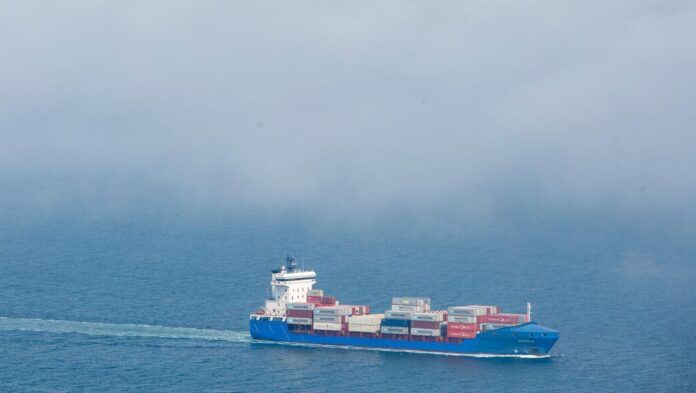
Rome – The closure of the Strait of Hormuz is not a temporary shipping disruption but the beginning of a systemic agrifood shock that could trigger a severe global food price crisis within six to 12 months. Avoiding such an outcome will require alternative trade routes, restraint on export restrictions, protection of humanitarian flows, and buffers to absorb higher transport costs, the Food and Agriculture Organization of the United Nations (FAO) has warned.
The time has come to “start seriously thinking about how to increase the absorption capacity of countries, how to increase their resilience to this choke, so that we start to minimize the potential impacts,” FAO Chief Economist Maximo Torero said in a new podcast published on Wednesday.
This involves exploring “intervention by governments, by international financial organizations, by the private sector, and by UN agencies and other research centers to try to help countries to be able to cope better with the current situation,” Torero said.
According to FAO, the window for preventive action is closing quickly. Decisions taken now by farmers and governments on fertilizer use, imports, financing and crop choices will determine whether a severe global food price crisis emerges within six to 12 months.
The impact is already visible. The FAO Food Price Index, which tracks monthly changes in the international prices of a basket of globally traded food commodities, rose for a third consecutive month in April, driven by high energy costs and disruptions linked to the conflict in the Middle East.
The shock is unfolding in stages: energy, fertilizer, seeds, lower yields, commodity price increases, then food inflation.
Mitigating these impacts will require shifting to alternative land and sea routes, including via the eastern Arabian Peninsula, western Saudi Arabia and the Red Sea, said David Laborde, Director of FAO’s Agrifood Economics Division. However, these routes have limited capacity, making it critical to avoid export restrictions by major producers.
This is especially critical for safeguarding humanitarian food flows, Torero added.
The situation could worsen with the onset of El Niño, which is expected to bring droughts and disrupt rainfall and temperature patterns across several regions.
Policy recommendations
FAO has compiled a series of policy recommendations designed to deal with the Strait of Hormuz crisis.
Short-term recommendations:
- Rapidly secure alternative land and sea corridors to bypass Hormuz – this won’t resolve the magnitude of the supply shock of inputs but will help to marginally reduce it.
- Avoid export restrictions, especially on energy, fertilizers and inputs.
- Exempt food aid from trade curbs.
- Promote in emergency interventions intercropping (cereals + legumes) to cut nitrogenous fertilizer use and provide major nutritional, environmental, economic, and agronomic benefits.
- Activate social protection programmes, drawing on lessons from Latin America.
- Avoid blanket subsidies, which create significant fiscal pressures and tend to be regressive; instead, prioritize targeted support for the most vulnerable through digital registries that can efficiently direct assistance to vulnerable rural households and smallholders, particularly in Africa.
Medium-term recommendations:
- Avoid boosting biofuel demand during shortages to limit food–fuel competition.
- Ensure energy policy responses do not exacerbate food crises.
- Expand affordable credit for farmers and agribusinesses through second-tier institutions to provide credit lines to reach SMEs, MSMEs, and value-chain actors. These lines should be of low interest emergency credit, with repayment schedules aligned to harvest periods and with at least six to nine months of grace periods.
- Combine agricultural loans with guaranteed offtake agreements from aggregators, processors, or public buyers.
- Use digital farmer registries and mobile money systems, as implemented in Mozambique and Peru, for rapid disbursement.
- Integrate informal farmers into different forms of horizontal coordination (farmer associations, farmer groups, cooperatives, etc.) to improve access to finance and support and take the crises as an opportunity to formalize farmers through digital registries.
- Provide facilities for balance-of-payments, support of rapid disbursement and expand financing for food and fertilizer imports. The Food Import Financing Facility is design for this and the implementation in 2022 of the food shock driven window should be reactivated.
- Use fast-track financing and increase grants for debt-distressed countries through existing mechanisms of MDBs and IFIs.
Long-term recommendations:
- Diversify ports, corridors, storage, and logistics systems globally to reduce chokepoint risks in the future.
- Build regional reserves and warehousing capacity to strengthen future shock absorption.
- Improve the resilience of domestic and cross-border transport systems.
- Use concessional financing to accelerate diversification of the energy mix and expand irrigation by replacing diesel with electric and solar-powered systems, particularly for irrigation.
- Expand the use of electrified machinery, drones, and precision agriculture technologies.
- Improve efficiency through soil mapping and precision application to reduce fertilizer waste and increase nutrient-use efficiency.
- Develop innovation funds to support green ammonia, biostimulants, crop genetics, and nutrient-efficiency technologies. While this will take three to five years, it will significantly strengthen long-term resilience.
- Coordinate with fertilizer companies to develop shared soil and fertilizer mapping systems based on agreed common standards.
- Support crop switching, intercropping, and fertilizer efficiency improvements rather than pursuing full system overhauls.
- Strengthen macroeconomic resilience to food inflation and import shocks.
- Expand the use of early warning systems, insurance, and monitoring mechanisms to act before crises escalate. This is even more urgent given the high probability of a strong El Niño event.
Source: FAO