

The 2026 elections have become more than a contest over who will become the next President of Galmudug. They are increasingly testing whether organized political parties can reshape the distribution and exercise of political power within one of Somalia’s most strategically important Federal Member States.
At the center of this contest is the Justice and Solidarity Party (JSP) and two figures who could play complementary roles: Liibaan Ahmed Hassan, popularly known as Liibaan Shuluq, who is seeking the Galmudug presidency, and Hussein Mohamed Nuur “Dhegaweyne,” a federal parliamentarian and senior JSP figure who has positioned himself for the Speakership of the next Galmudug Parliament.
The two positions carry different institutional responsibilities. The presidency provides executive leadership and directs the administration of the state, while the Speakership controls an influential legislative institution responsible for representation, lawmaking, and oversight. If JSP succeeds in securing both positions, it would gain substantial influence over Galmudug’s executive and legislative branches.
This possibility assumes greater significance in light of the Insight Horn Institute (IHI) policy brief, From Elections to Democratic Governance: Strengthening Political Stability and Electoral Integrity in Galmudug. The report examines Galmudug’s political development since 2015 and highlights the growing importance of organized party politics in the state’s 2026 transition.
The central question, therefore, is not simply whether JSP can acquire political power. It is whether coordinated party organization can strengthen governance while preserving institutional independence, political competition, regional autonomy, and democratic legitimacy.
From State Building to Institutional Competition
Galmudug’s political development since 2015 provides important context for the current transition. The initial priority was state building: creating a functioning regional administration capable of exercising authority in a fragmented political environment.
Although formal institutions were established, political representation remained heavily influenced by clan structures, traditional elders, negotiated agreements, and elite bargaining. The result was a state with formal institutions but limited and sometimes contested authority.
The 2017 transition exposed these weaknesses. Although leadership succession took place through formal mechanisms, disputes over authority and power sharing persisted. Formal state institutions continued to coexist with powerful informal structures, creating multiple centers of political influence.
By 2020, Galmudug had developed greater administrative and institutional capacity. Its cooperation with the Federal Government became increasingly important, particularly in security and public administration. Yet political disputes over electoral processes, federal intervention, and the distribution of authority remained unresolved.
These experiences demonstrate an important distinction: institutional development does not automatically produce democratic development. A state can establish functioning administrative institutions without developing competitive political parties, broad citizen participation, or effective mechanisms of accountability.
Galmudug’s challenge in 2026 is therefore different from the challenge it faced in its formative years. The question is no longer simply whether viable institutions can survive. It is whether those institutions can support broader political participation, organized competition, accountability, and representative government.
The Rise of Party Politics
The growing role of organized political parties represents a significant shift in Galmudug’s political landscape. Historically, competition for power has been shaped by clan bargaining, traditional leadership, personal networks, and temporary alliances among political elites. These factors remain influential, but stronger political parties provide an additional mechanism for organizing political competition.
Parties can offer candidates organizational structures that extend beyond personal networks. They can mobilize supporters, coordinate campaigns, articulate political programs, and connect regional politics with national political networks.
JSP’s support for Liibaan Shuluq illustrates this development. The party gives his presidential campaign access to organizational resources, political networks, and national visibility that may be difficult for an individual candidate to build independently.
However, party institutionalization also presents risks. A national party with close relationships to federal political actors may possess organizational advantages over locally based competitors. This raises an important question: does the expansion of party politics strengthen democratic competition, or does it create new channels through which national political influence can dominate regional institutions?
Galmudug’s 2026 transition could therefore become a test of Somalia’s emerging party system as a whole.
Liibaan Shuluq and the Executive Challenge
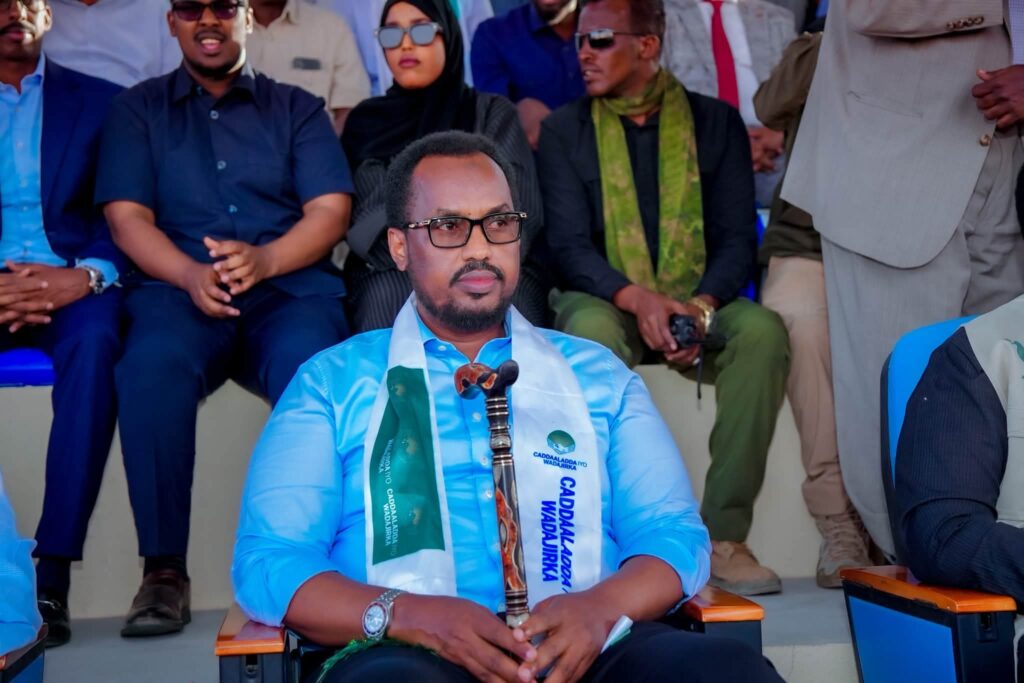
Liibaan Ahmed Hassan represents JSP’s effort to translate national political organization into executive authority in Galmudug. His political background is particularly relevant to the realities of governing a state where security, clan relations, reconciliation, business interests, and federal-state relations remain closely interconnected.
Effective leadership in Galmudug requires the ability to engage traditional authorities, security actors, local business networks, political constituencies, and federal officials. A president who cannot manage these relationships would face significant difficulties governing a politically fragmented state affected by insecurity.
Federal-state relations will be among Liibaan’s most difficult challenges if he wins the presidency. The Federal Government has played an important role in security coordination, institution building, and political dialogue in Galmudug. At the same time, perceptions of excessive federal intervention have repeatedly generated concerns about regional autonomy and the legitimacy of state institutions.
The issue, therefore, is not whether Galmudug should cooperate with Mogadishu. Such cooperation is often unavoidable and necessary. The more important question is whether cooperation strengthens Galmudug’s institutions or creates dependency on federal political structures.
A Liibaan administration would need to demonstrate that national political relationships can be used to strengthen regional institutions without compromising their credibility, independence, or constitutional authority.
Hussein “Dhegaweyne” and the Parliamentary Dimension
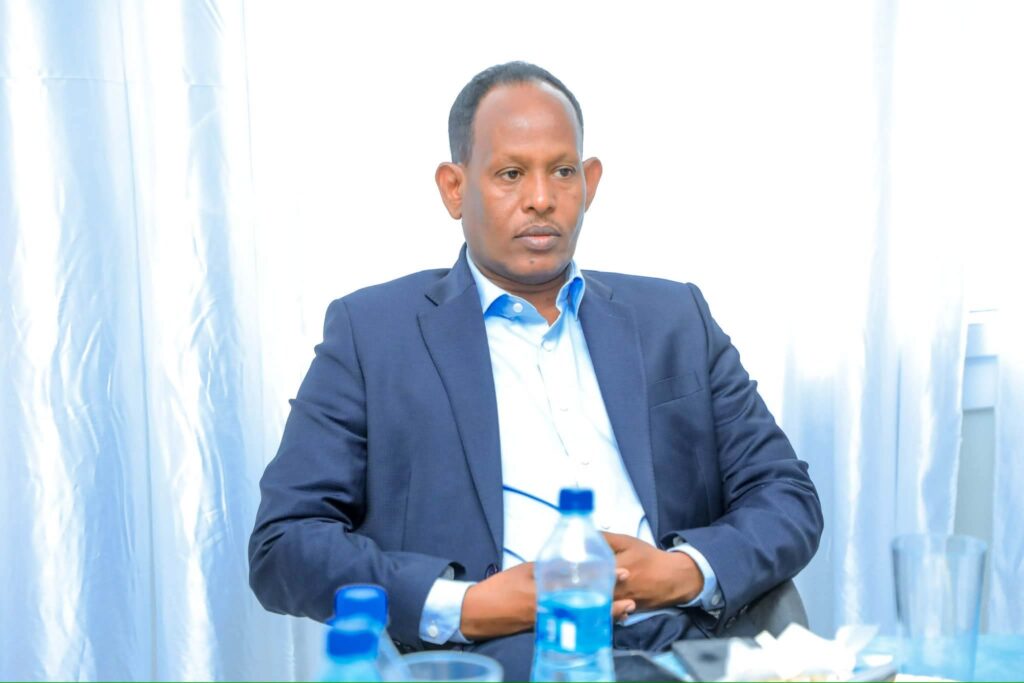
While presidential politics attracts greater public attention, parliamentary leadership may be equally important to the functioning of a government.
Hussein Mohamed Nuur “Dhegaweyne,” a Member of Somalia’s Federal Parliament and senior JSP official, represents the party’s potential parliamentary strategy. He is widely regarded within political circles as a technocrat and administrator whose influence derives largely from organizational and institutional skills rather than public visibility.
As one of JSP’s internal organizers, Dhegaweyne has reportedly engaged with politicians, traditional leaders, youth representatives, and Islamic scholars from different Galmudug communities. His consultations suggest an effort to build a broad political coalition ahead of the formation of the next state parliament.
If Liibaan represents JSP’s attempt to secure executive power, Dhegaweyne represents the party’s effort to establish influence within the legislature.
This combination could provide JSP with considerable institutional leverage. Coordinated leadership between the executive and legislature could improve policy implementation, reduce institutional gridlock, and allow a governing party to pursue a coherent political program.
But the same arrangement carries a democratic risk. If one party controls both institutions without meaningful checks and balances, parliamentary independence could weaken and political power could become excessively concentrated.
The challenge for JSP would therefore be to demonstrate that party coordination can coexist with legislative oversight and institutional independence.
Clan Politics and Inclusion
The emergence of party politics will not immediately replace clan-based political organization in Galmudug. Clan constituencies, traditional elders, negotiated settlements, and informal political mediation remain central to political life.
These mechanisms have historically helped manage political disputes in an environment where formal institutions were weak. However, they have also limited the participation of groups that are not adequately represented within traditional power-sharing structures.
The IHI policy brief identifies the continued underrepresentation of women, youth, minorities, and internally displaced people as important democratic deficits. This places a broader responsibility on political parties such as JSP.
If Shuluq and Dhegaweyne succeed, they will have to balance party interests with clan expectations, local priorities, and national political relationships. A government perceived as favoring one political or clan constituency could quickly face resistance.
Conversely, simply reproducing existing elite arrangements under the label of party politics would do little to advance democratization.
The potential value of party politics lies in its ability to create new forms of political organization in which platforms, public accountability, and citizen participation gradually become more important alongside traditional mechanisms of political accommodation.
For JSP, electoral success would therefore need to be followed by inclusive governance, including meaningful engagement with communities and political actors outside the party.
Security and Governance
Politics in Galmudug cannot be separated from security. Every major political transition has been influenced by the security environment, and military advances have expanded state authority in some areas. Yet military success alone cannot produce lasting stability.
The IHI analysis emphasizes that durable peace requires functioning civilian institutions alongside security operations. Justice, reconciliation, local administration, public services, and accountable governance are essential to consolidating areas brought under government control.
For any incoming administration, the test will therefore be whether political authority can be transformed into effective civilian governance. If military gains are not accompanied by functioning institutions, local trust, and public services, stability may remain fragile.
JSP’s Wider Federal Strategy
The developments in Galmudug also form part of a broader national political strategy. Somalia is attempting to develop a stronger multiparty system while maintaining a federal structure in which Federal Member States retain meaningful political authority.
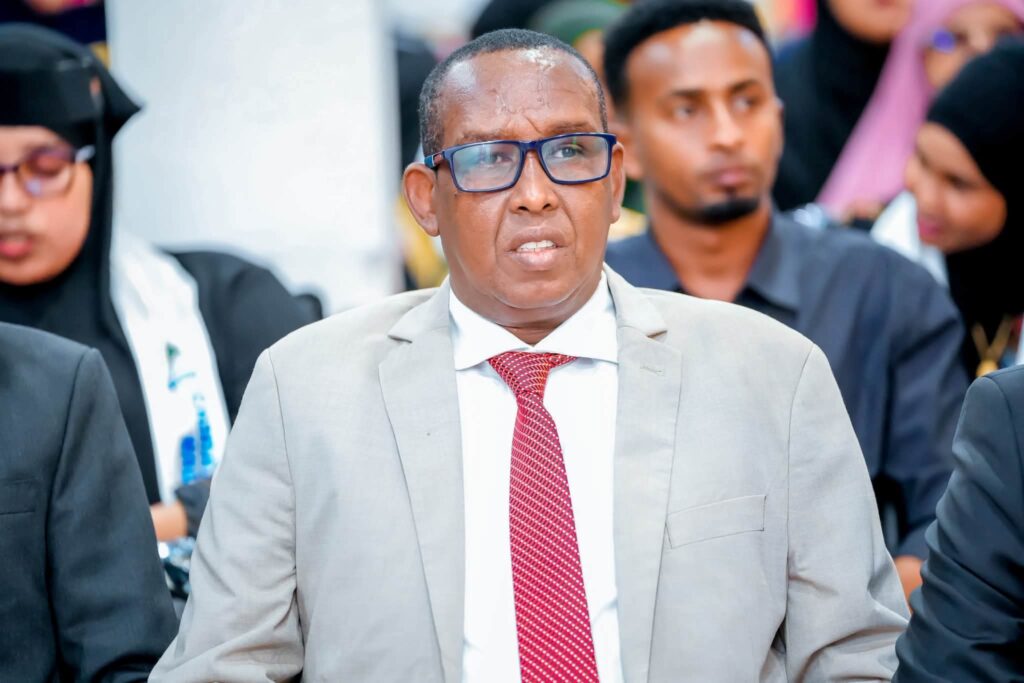
Keeping the upcoming federal elections in mind, JSP appears to have mobilized influential politicians in modern Somalia, led by JSP’s Secretary of Federal States, MP, and veteran journalist Mohamed Ibrahim Muallimu. These politicians have adopted carefully calculated strategies to expand JSP’s influence across the Federal Member States. So far, JSP has gained influence in Hirshabelle, Galmudug, and South West State.
These objectives can reinforce each other, but they can also come into conflict. National parties can connect political actors across regions, encourage competition based on policy, and reduce reliance on purely personal political networks. Strong parties can also create continuity between electoral campaigns and government programs.
However, national parties can become instruments for extending federal political influence into state institutions.
The consequences will depend on how parties acquire and exercise power and whether they respect the constitutional boundaries between the Federal Government and Federal Member States. The transition away from the 4.5-based clan power-sharing formula will also be critical. Replacing clan allocation with party politics will only constitute democratic progress if parties themselves become representative, competitive, and accountable.
Galmudug could therefore become an important case study for Somalia’s emerging political system. If JSP demonstrates that a national party can compete successfully within a Federal Member State while respecting institutional independence, pluralism, and regional autonomy, it could strengthen the argument that party politics and federalism can coexist.
If party expansion instead produces political centralization, weakened parliamentary oversight, or excessive federal influence, Galmudug could demonstrate the opposite.
The Supreme Court and the Galmudug Elections
The political contest was further complicated by the Supreme Court’s decision of August 24, 2026, which annulled the results of the July 30 Galmudug State Assembly and local council elections.
Presided over by Chief Justice Baashe Yusuf Ahmed, the court found that the elections had not complied with Somalia’s Constitution and Electoral Law and ordered the National Independent Electoral and Boundaries Commission (NIEBC) to organize new elections for the Galmudug Parliament and local councils at the earliest opportunity.
The ruling followed a petition by the Towfiiq Party and others, who argued that the results were fraudulent and did not reflect voters’ will. To prevent a governance vacuum, the existing structures will remain in place until new elected institutions are established.
The court also outlined minimum legal standards for valid elections, including at least 90 days’ notice, 45 days of campaigning, and a minimum of 120 working days for candidate submissions. It rejected the argument that election results could not be challenged without a complaint being filed on election day.
Politically, the decision is significant because the disputed election results had favored JSP, the party associated with President Hassan Sheikh Mohamud. The ruling therefore removes an immediate electoral advantage and places the party’s strategy under renewed scrutiny.
The NIEBC has stated that it will comply with the ruling and reorganize the elections, while the Towfiiq Party welcomed the decision.
Conclusion
The struggle for political influence in Galmudug is increasingly part of a larger transformation in Somali politics. JSP appears to be pursuing a strategy that combines national party organization with influence inside Federal Member States. Its efforts in Galmudug, alongside developments in other states, suggest an attempt to build a political network capable of shaping the next phase of Somalia’s federal elections.
In Galmudug, Liibaan Shuluq and Hussein “Dhegaweyne” potentially represent two sides of that strategy: executive leadership and parliamentary influence.
If JSP secures both positions, it could enjoy significant institutional leverage. That could produce greater policy coordination and administrative effectiveness. But it could also create concerns over concentration of power, weakened legislative oversight, federal interference, and reduced political pluralism.
The Supreme Court’s annulment of the July elections has added another layer of uncertainty and demonstrated that electoral legitimacy will remain central to the political contest.
Ultimately, JSP’s success should not be measured solely by whether it wins the presidency or Speakership. The more consequential test will be whether it can convert political organization into legitimate, inclusive, and accountable governance.
For Galmudug, the 2026 transition represents an opportunity to move beyond a political system dominated by temporary alliances and elite bargaining toward stronger institutions and organized competition. For Somalia, it represents a broader test of whether multiparty politics can develop without undermining federalism.
The outcome will determine not only who governs Galmudug, but also what kind of political system Somalia’s emerging party era will produce.
Written by: Abdi Musse Mohamud
The author is chief editor of Finnish-Somali media network, media trainer and peace advocate. He writes about peace and conflict solution in Horn of Africa.
He can be reached via email: abdimusem@yahoo.com
Note: The Article can be freely reproduced, published and distributed by mentioning the source.