

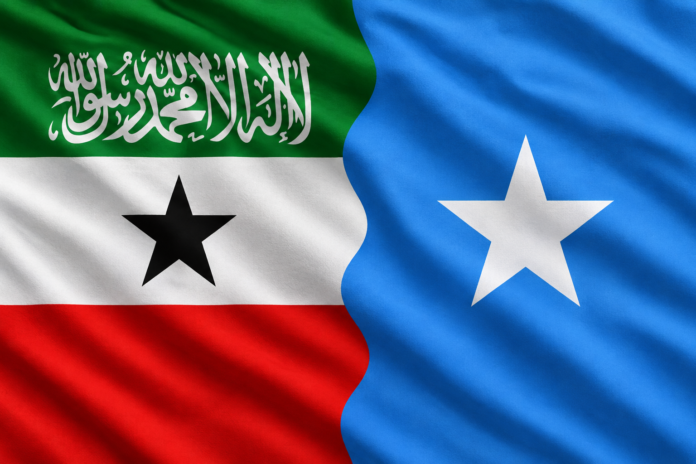
The Insight Horn Institute argues that the time has come to move from a politics of maximalism towards managed coexistence
For more than three decades, Somalia and Somaliland have lived with a political contradiction that diplomacy has failed to resolve. Somalia retains broad international recognition of its sovereignty and territorial integrity. Somaliland, meanwhile, has governed itself through separate political, administrative and security institutions since declaring independence in 1991. Each side has developed a powerful political reality. Neither, however, has been able to eliminate the reality created by the other.
In its latest policy brief, Somalia-Somaliland Dispute: Pathways to Peaceful Co-existence and Future Settlement, the Insight Horn Institute (IHI) argues that this long-standing equilibrium is becoming increasingly fragile. The issue, IHI contends, is no longer simply whether Somalia and Somaliland will ultimately become one state or two. The more urgent question is whether the two sides can develop a political relationship capable of managing disagreement without allowing it to become violent or permanently social.
That distinction matters not only for Somalia and Somaliland, but also for the wider Horn of Africa—and for the African Union, Gulf States and European Union, whose policies will help shape the environment, in which the dispute evolves.
Neither side can impose its preferred outcome
At the heart of the dispute are two competing forms of legitimacy.
Somalia’s position is grounded in internationally recognized sovereignty and territorial integrity. The African Union and other regional and international institutions have consistently supported these principles. This gives Mogadishu significant diplomatic and legal standing.
Yet international recognition has not translated into effective political authority over Somaliland. Since 1991, Mogadishu has not administered Somaliland, which has developed its own institutions, security structures and political processes.
Somaliland’s position rests on the opposite form of legitimacy: effective self-government and political agency developed over decades. Its institutions have created a political reality that cannot simply be removed through diplomatic declarations but – on the other hand effective self-government has not produced broad international recognition.
As IHI’s analysis puts it, Somalia’s internationally recognized sovereignty cannot eradicate Somaliland’s existing political and institutional structures, while Somaliland’s autonomous governance cannot nullify Somalia’s internationally recognized sovereignty. This is the strategic stalemate!
Somalia has significant diplomatic advantages, but cannot create political reunification through declarations alone. Somaliland has developed substantial political and institutional autonomy, but cannot compel the international community to recognize its independence.
Thus far, neither side can simply wait for time to deliver victory.
Recognition is not a substitute for negotiation
The diplomatic landscape is also changing.
IHI’s policy brief highlights Israel’s recognition of Somaliland in December 2025 as an important departure from the previous diplomatic equilibrium. For Somaliland, the development demonstrated that its diplomatic isolation cannot necessarily be assumed to be permanent. But the response from African and other international actors also demonstrated the limits of recognition diplomacy one state’s recognition does not automatically produce wider international acceptance.
For Somalia, this reinforces the importance of defending sovereignty through regional and multilateral institutions. For Somaliland, it creates incentives to expand international relationships and demonstrate its value as an economic, commercial and security partner but there is a danger that both sides will increasingly compete for external diplomatic support instead of addressing the underlying political problem.
That danger is amplified by the growing strategic importance of the Horn of Africa.
The Red Sea and Gulf of Aden have become increasingly important because of maritime insecurity, conflict in Yemen, commercial routes and competition among regional and international powers. Somaliland’s location and the infrastructure around Berbera have consequently attracted growing international attention foreign investment and security partnerships can bring genuine benefits.
But external actors also have interests of their own. A port may be viewed principally as a logistical asset; a security partnership may be driven by counter-terrorism or maritime priorities; diplomatic engagement may reflect wider geopolitical competition.
IHI therefore cautions that external engagement should not be allowed to substitute for political dialogue. Strategic partnerships may alter the balance between the parties, but they cannot by themselves resolve competing claims over sovereignty, territory and legitimacy.
Laascaanood shows why the dispute is more than a two-party question
The situation in Laascaanood and the wider Sool region demonstrates that the dispute cannot be understood simply as a confrontation between Mogadishu and Hargeisa. In fact, the situation in Laascaanood and the surrounding Sool area illustrates how territorial issues can never be resolved through the simple choice between one Somalia and independent Somaliland. The local population in both cases has its own specific political interests, security concerns, past grievances, opinions on government/representation and visions regarding governance.
Moreover, the emergence of SSC-Khaatumo as a federal-affiliated political entity has significantly changed the political landscape. It will be crucial to consider these factors when attempting to reach a long-term resolution to this conflict.
As stated by IHI, it is necessary to recognize contested communities as political entities, with political interests of their own (as opposed to mere territories to be apportioned to competing nation-state building processes).
Therefore, an agreement reached solely at the level of the two capital cities may lack the political legitimacy and authority required for a lasting peace — particularly since those whose governance, security and political futures are at issue are not given any real voice or input into those decisions.
The greatest danger may become social
The long-term risk is that disagreement over politics will become a social conflict and divide society. Politicians on both sides of the divide share common family, commercial, language, cultural, and historical roots. It is possible for political disagreement to exist without destroying those shared interests.
However, when political views are perceived to reflect one’s loyalty (and thus, lack thereof) to an opposing group/position, then that is where the threat becomes real. For example in Somalia, a politician who supports working towards a relationship with Somaliland could be labelled a “traitor” or someone who is undermining Somali National Unity.
On the other hand In Somaliland, a politician who supports closer engagement with Mogadishu may instead be accused of compromising the “independence project.” Social media can amplify these forces; what was once a complex issue over issues such as statehood, territorial control, history, and international recognition will be condensed into simple narratives of either loyalty or betrayal.
The deeper threat is not misinformation alone. As polarization increases, so too do the ways in which different groups view each other. Eventually this will turn political disputes into animosity toward each other and make future compromise increasingly difficult. This should be concerning to policy makers worldwide.
From maximalism to managed coexistence
Because of this, the choice of how to proceed with the final political arrangement should not be presented to Somalia or Somaliland as giving up its long-term political stance.
Somalia has the right to defend its long-term stance regarding sovereignty and territorial boundaries; Somaliland has the right to continue advocating for independence and international recognition.
However, because of the practical implications of maintaining and implementing the terms of the current political arrangement, practical collaboration should no longer be contingent upon reaching an agreement concerning the final political status. This is essentially the core idea proposed by IHI “Interim Initiative”: An Interim Coexistence Framework that will allow each side to maintain their long term positions relative to one another, while providing a structured set of procedures to promote communication and practical cooperation among them, including conflict resolution.
In order to achieve this goal, the interim coexistence framework will need to contain at least five elements:
- First, Somalia and Somaliland will need to agree to create a permanent technical/political dialogue process to replace the sporadic nature of their diplomatic interactions.
- Second, they should separate negotiations about their respective final statuses from all forms of practical cooperation. For example, security coordination; humanitarian assistance; public health; trade; civilian travel; etc., are all issues related to people’s day-to-day lives which should not require an agreement on sovereignty.
- Third, the two sides will need to establish mechanisms through which they can directly communicate with one another during times of crisis in order to reduce the risk of miscalculation and escalation.
- Fourth, there needs to be a separate representation track for disputed areas so that those who live in these regions are able to give input into decision-making processes that affect governance and security within their region(s).
- Fifth, both sides will also need to take steps to reduce inflammatory language; disinformation; and collective blame towards each other.
Finally, IHI believes that the African Union should play a major role in facilitating structured contact/engagement between the two sides without taking a formal position as regards what constitutes the “final” political arrangements between the two parties.
A role for Europe and Africa
The EU can provide crucial ssupport to further enhance both local and regional approaches to resolving conflicts in the Horn through a broadening of its involvement in that area. The EU has an interest in the Red Sea, the Gulf of Aden and more broadly in achieving stability in the entire Horn of Africa.
However, to achieve this kind of stability, there must be a solution to the underlying political problem; merely addressing symptom (maritime security concerns, political crises etc.) will only address symptoms and not provide long-term solutions as the political dispute continues to become hardened.
African Union, too, faces an equivalent level of difficulty. The AU’s focus since inception on the principles of sovereignty and territorial integrity represent an essential base for promoting stability throughout the continent. While defending these basic principles may have merit, they do not necessitate waiting forever for reunification.
Regional participation in processes such as dialogue facilitation, crisis resolution and coexistence can assist the AU in preserving these principles while providing room for an eventual resolution. While the ultimate goal should not be to resolve the issue of what the final status of Somalia and Somaliland shall be at some premature date; rather, it should be to avoid allowing a lack of agreement between them regarding their final status create permanent instability.
The choice is managed bargaining or unmanaged hardening
None of these actions will be simple.
Some as taking steps toward de facto recognition could view engagement with Somaliland in Mogadishu. Cooperation between Somalia and Somaliland in Hargeisa that does not lead to recognition could be viewed by some as establishing normal relationships between the two entities while continuing to leave the question of independence unanswered.
Both of these views have merit. The IHI study notes that political miscalculation may present the largest challenge to an interim coexistence framework. Therefore, all participants need to clearly understand that their involvement is strictly on a non-discriminatory basis cooperation can never represent recognition, submission or acquiescence to the other party’s position.
However, the alternative to cooperation is stagnation, which is not the same as stability. As time passes and the conflict continues, both sides will continue to develop differing institutional structures, identities will solidify, claims will accrue and the next generation will grow up with two separate political narratives. At some point it will become increasingly difficult for leaders to negotiate based on interest alone as they will also be negotiating issues related to identity and loyalty.
Therefore, the strategic options available to Somalia and Somaliland are not merely union or separation. Rather, it is managed negotiation or unmanaged entrenchment. According to the Insight Horn Institute’s policy brief, the establishment of an interim coexistence framework would not resolve the ultimate issue of political status.
However, it would significantly decrease the probability of violence occurring within either entity, provide mechanisms for continued dialogue among the parties involved, allow for the protection of civilians and commercial transactions to occur between both entities, create opportunities for marginalized communities to participate in decision making processes and maintain possibilities for future settlements.
To both Somalia and Somaliland, this may likely be the best way forward. For both the African Union and European Union, providing support for such a process would not require choosing one side over the other. Instead, it would enable them to choose to promote peaceful coexistence versus a perpetual impasse, while maintaining possibilities for resolving the outstanding issues through negotiations at a later date.
Conclusion: The Future Isn’t Set in Stone
There’s a great deal of similarity between the political discourses in Mogadishu and Hargeisa. Both argue that their respective outcomes are inevitable.
In other words:
– Mogadishu believes there will be a unified Somalia.
– Hargeisa believes there will be an independent Somaliland.
However, political history does not offer guarantees that these outcomes will occur without some difficulty or resistance.
A major problem with the politics of inevitability is the false assumption that negotiations are unrequired. If unity is inevitable; then there is no reason to make concessions.
If independence is inevitable, then there is no need to negotiate.
Young generation in Hargeisa and Mogadishu should start a new. They should carefully review the pros and cons for recognition of Somaliland as an independent nation — but they should also expect to present similarly strong and compelling evidence as to why preserving Somali national unity would be preferable, and on which terms such unity would be feasible and meaningful.
We should treat neither unity nor independence as a sacred issue. The future of Somalia and Somaliland should be viewed as a political issue — and all political issues require political courage, compelling argumentation, and discussion.
The content for this article is largely based upon a policy brief by the Insight Horn Institute (IHI), titled “Somalia – Somaliland Dispute: Pathways to Peaceful Coexistence & Future Settlement.” IHI is a private, nonpartisan research and policy institute with a focus on providing evidence-based information to aid in making informed decisions in Somalia and across the Horn of Africa region.
Written by: Abdi Musse Mohamud
The author is chief editor of Finnish-Somali media network, media trainer and peace advocate. He writes about peace and conflict solution in Horn of Africa.
He can be reached via email: abdimusem@yahoo.com