

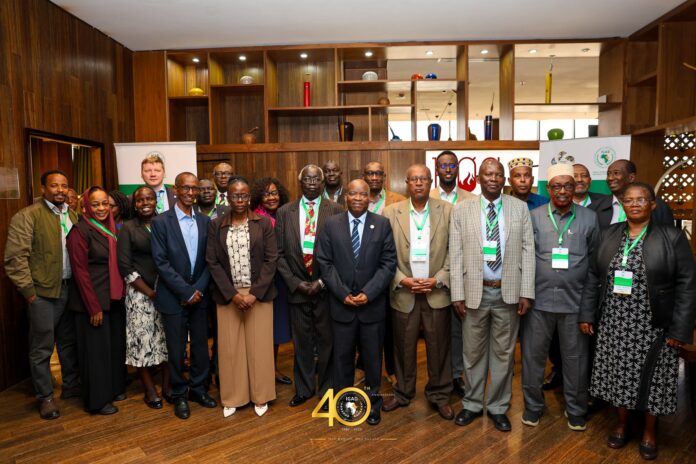
Addis Ababa, Ethiopia, 17 August 2026 – The Intergovernmental Authority on Development (IGAD), with support from the African Union Commission, the World Bank, AUDA-NEPAD, and the Food and Agriculture Organization of the United Nations (FAO), today opened a two-day Regional Dialogue on the Comprehensive Africa Agriculture Development Programme (CAADP) Fifth Biennial Review Report, Performance and Lessons Learned.
The dialogue, taking place from 17–18 August 2026 in Addis Ababa, brings together representatives of IGAD Member States, the African Union Commission, AUDA-NEPAD, technical institutions and development partners to assess regional performance under the Malabo Declaration and strengthen preparations for implementation of the Kampala Declaration and Strategy Action Plan (2026–2035).
The Fifth Biennial Review Report, released in May 2026, marks the final assessment of the Malabo Declaration implementation cycle covering 2015–2025. The findings indicate that the IGAD region remains below the required trajectory for achieving the Malabo commitments, despite progress in several thematic areas.
The assessment comes against a challenging regional food security situation. More than 63 million people were estimated to be food insecure in 2024, while more than eight million children were affected by malnutrition. Climate shocks, prolonged droughts, degraded soils, fragmented markets and continued dependence on rainfed agriculture remain major constraints to agricultural transformation.
Opening the dialogue, H.E. Moses Vilakati, Commissioner for Agriculture, Rural Development, Blue Economy and Sustainable Environment at the African Union Commission, called for renewed focus on implementation as Africa transitions from the Malabo commitments to the Kampala agenda.
“The era of reviewing Malabo is behind us. The era of implementing Kampala is before us. What has consistently limited our progress is not a lack of frameworks; it is a lack of implementation. Our citizens demand not another declaration, they demand delivery.”
Commissioner Vilakati highlighted the need for Africa to strengthen domestic agricultural production, noting that the continent continues to spend nearly USD 100 billion annually on food imports despite its significant agricultural potential.
“Every dollar spent importing food that could be produced within Africa represents lost jobs, lost income, lost investment, and lost opportunities for African farmers, entrepreneurs, women, and youth,” he said.
Speaking on behalf of Mr Daher Elmi, Director of IGAD’s Agriculture and Environment Division, Dr Sylvia Henga underscored the need for the region to critically examine why food insecurity continues to rise despite sustained investments and policy commitments.
“Despite the progress and efforts to improve agriculture over the last decade under Malabo, the number of food-insecure people continues to rise. It is critical that we understand why and ensure that our investments translate into measurable improvements in people’s lives.”
The conclusion of the Malabo cycle marks the transition to the Kampala Declaration and Strategy Action Plan (2026–2035), which sets a new continental vision for resilient, inclusive, productive, sustainable, and prosperous agri-food systems.
Among its targets, the Kampala Declaration seeks to increase agri-food output by 45 percent, triple intra-African trade in agri-food products, reduce post-harvest losses by 50 percent, mobilise at least USD 100 billion in public and private investment, halve extreme poverty, and promote the allocation of at least 10 percent of public expenditure to agri-food systems development.
Commissioner Vilakati also outlined a 100-Day Rolling Plan aimed at accelerating production, productivity, and improved nutrition across African Member States. Priority areas include soil health mapping to support evidence-based fertiliser application, conservation of productive indigenous seed varieties through gene banks and the establishment of regional fertiliser blending facilities to reduce dependence on imports.
“The success of the Kampala Declaration will not be measured by the number of meetings we organise or the reports we produce. It will be measured by whether we improve the lives of our people,” Commissioner Vilakati said.
Mr Zena Habtewold, Senior Advisor to Ethiopia’s Minister of Agriculture, officially opened the dialogue on behalf of the Federal Government of Ethiopia, stressing that the transformation of agri-food systems is fundamental to regional food security, climate resilience and economic stability.
“Sustainable agri-food system transformation is an absolute prerequisite for our shared food security, climate resilience and economic stability,” he said.
Mr Habtewold highlighted Ethiopia’s ongoing efforts to domesticate the continental agenda, including the establishment of a multisectoral national agri-food systems technical committee and partnerships with institutions including IFPRI, ILRI and AGRA. He also noted that Ethiopia is implementing more than 60 projects and programmes, with annual investments exceeding USD 160 million, including major commodity value-chain development initiatives.
Discussions during the opening session emphasised stronger mutual accountability, improved joint sector reviews, increased investment in resilience and green technologies, and greater public participation in the design and implementation of agricultural policies and technologies.
Participants also highlighted the importance of strengthening agricultural data and information systems and ensuring that early warning information and new technologies reach communities and farmers at the last mile.
“Our programmes must reach everyone to the last mile. Information, technologies, and investments must ultimately reach the farmers and communities they are designed to serve,” Dr Henga said.
Over the two days, participants will review regional and national performance under the Fifth CAADP Biennial Review, identify achievements and persistent challenges, assess trends across thematic areas and develop recommendations to strengthen implementation of the Kampala Declaration.
The dialogue will also contribute to refining regional guidance for domestication of the Kampala Strategy and Action Plan and strengthening coordination, financing, accountability, and performance tracking at national and regional levels.
Concluding her remarks, Dr Henga called for the lessons of the Malabo and Maputo implementation periods to inform a stronger and more results-oriented approach to the Kampala agenda.
“Let us leave this meeting determined to apply all the hard-earned lessons of the past decade and strengthen our resolve to build a food-secure, prosperous and resilient IGAD region.”